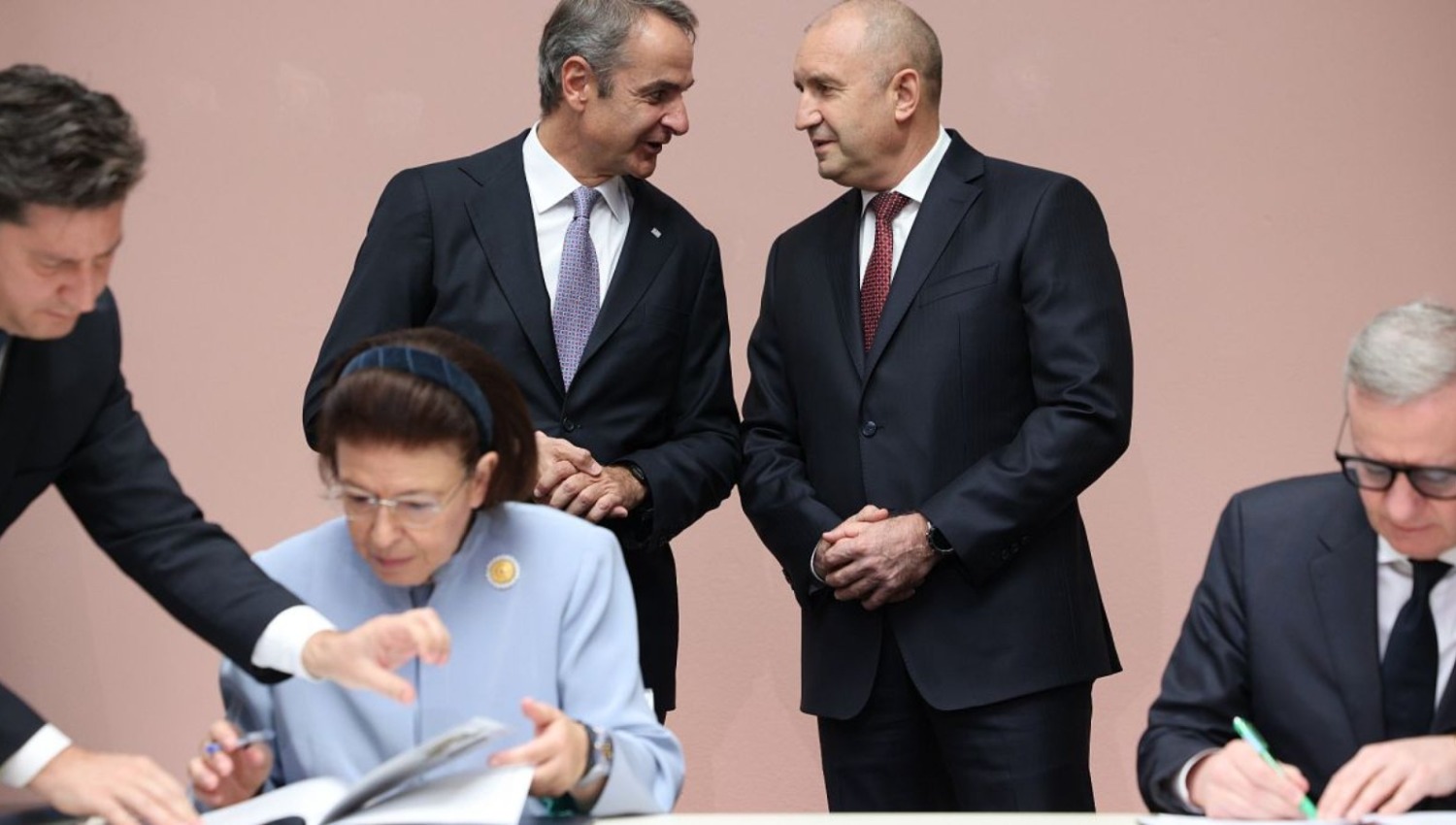
Greek Prime Minister Kyriakos Mitsotakis has said Greece will not accept any arrangement for the Parthenon Sculptures that implies foreign ownership, and will not agree to borrow them. He spoke in Thessaloniki on Saturday at a ceremony where Greece and Bulgaria exchanged historic artefacts.
Addressing guests at the Museum of Byzantine Culture, Mitsotakis linked the handover to the idea that monuments should be kept whole and should never be treated as spoils of war. The same principle, he said, drives the Greek campaign to reunite the sculptures, which he described as part of a universal monument that “remains violently dismembered”. He argued that the case should not be held back by legal or technical questions and that the time had come for justice.
Under the agreement, Bulgaria receives remains identified as those of Tsar Samuel, who ruled the First Bulgarian Empire from 997 to 1014 and fought repeated wars with Byzantium. After his army suffered a heavy defeat in 1014, the Byzantine emperor Basil II is said to have ordered thousands of Bulgarian prisoners to be blinded, and tradition holds that Samuel died soon after seeing them return. The remains are linked to the Basilica of Saint Achilleios in Prespa, where Professor Nikolaos Moutsopoulos uncovered four sarcophagi in 1965, and had been kept at the Thessaloniki museum in recent years.
In return, Greece receives 48 church artefacts that Bulgarian troops removed from churches and monasteries in northern Greece in 1917, during the First World War. They stayed in Bulgaria for more than a century, kept or displayed at the National History Museum in Sofia. The objects come from the Holy Monastery of Panagia Eikosifoinissa, the Holy Monastery of Timios Prodromos of Serres and the Holy Metropolis of Serres and Nigrita. They will be shown at the Museum of Byzantine Culture until 5 November 2026 before returning to the places they were taken from.
Bulgarian Prime Minister Rumen Radev, who attended the signing with Mitsotakis, said the two countries had left “the shadows of the past” behind them and now enjoyed close economic, political and cultural co-operation. The exchange carries out a memorandum of understanding signed by the culture ministers of both countries, Lina Mendoni and Eftim Miloshev, after many years of negotiations.