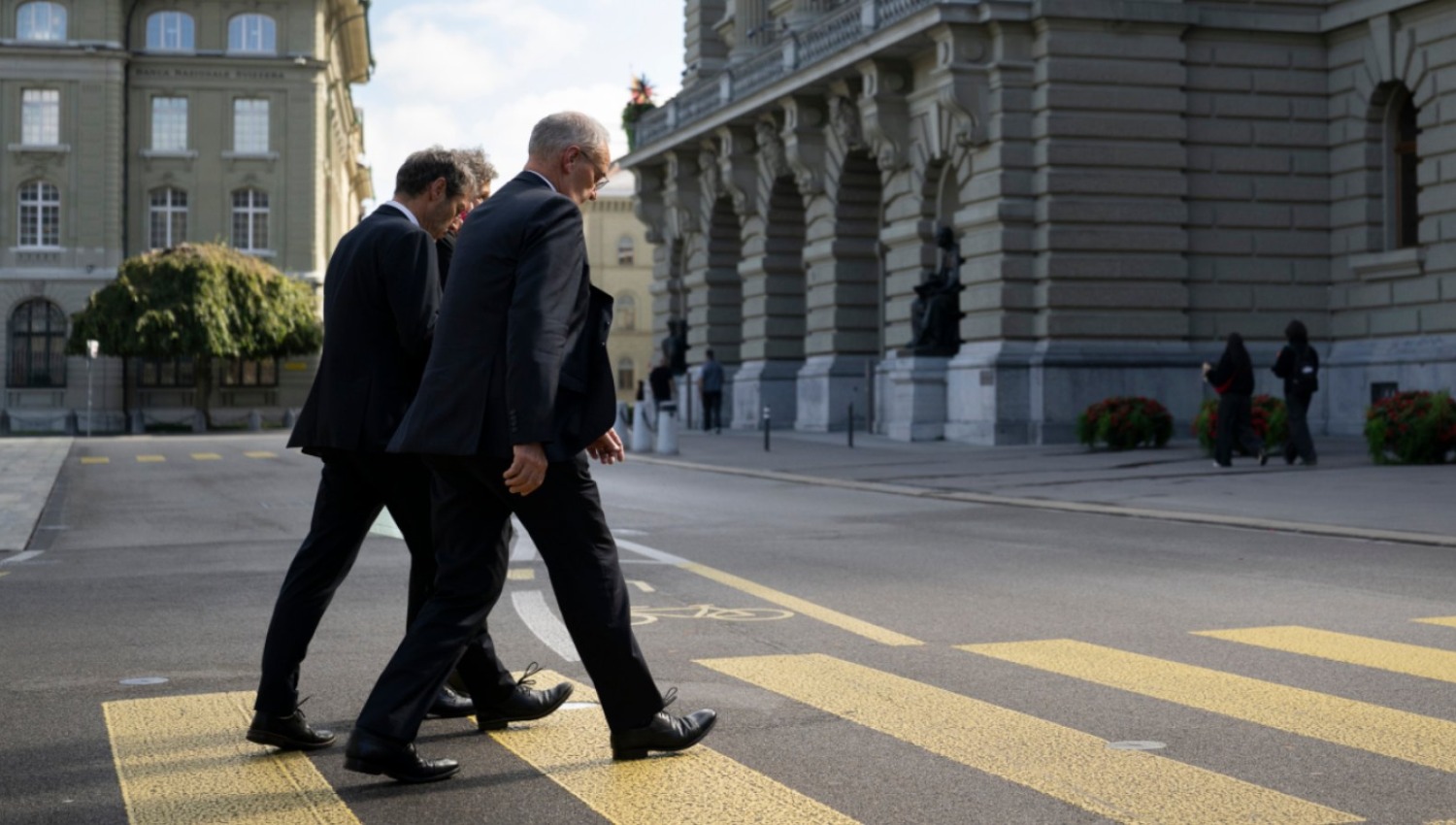
The contest to replace Guy Parmelin in the Swiss government is under way. The economics minister, who holds the Swiss presidency this year, announced on Friday that he will step down at the end of December after 11 years in the Federal Council. Parliament will choose his successor on December 9, and a long list of possible names is already doing the rounds.
Under the so-called magic formula, the convention that shares the seven seats of the Federal Council among the largest parties, the seat stays with Parmelin’s Swiss People’s Party. Parmelin has said he wants to make way for “new blood”. The party will put forward its official candidates on November 20 and has not yet said how many names its list will contain.
The most closely watched name from French-speaking Switzerland is Céline Amaudruz, the party’s vice-president and a Geneva politician who is also well known in the German-speaking part of the country. She chose not to run after Ueli Maurer resigned in 2022, but is now weighing a bid and plans to talk to her husband, her employer and the party leader within a few days. “It’s likely to be a long weekend,” the 47-year-old told public broadcaster RTS. She has broken with the party line several times recently, including on marriage for all and the legalisation of egg donation. The Vaud branch of the party wants the seat to stay in the French-speaking west, where Yvan Pahud and Nicolas Kolly are also mentioned. Observers describe Kolly as a capable politician who could build consensus.
Two strong contenders come from German-speaking Switzerland. Natalie Rickli, Zurich’s health director and a former member of the federal parliament, is one of the party’s best-known figures, although she will be fighting a cantonal re-election campaign in Zurich when parliament votes. St Gallen senator Esther Friedli, who also stayed out of the 2022 race, faces questions about whether her canton would be over-represented, since Finance Minister Karin Keller-Sutter is also from St Gallen.
Winning votes from other parties will matter, because the full parliament elects ministers. Central Switzerland has produced the names of Monika Rüegger of Obwalden, Marcel Dettling of Schwyz and Thomas Aeschi of Zug, but Aeschi is seen as a hardliner who would struggle to attract outside support, a label also applied to Magdalena Martullo-Blocher, Thomas Matter and Pascal Schmid. Lucerne’s Franz Grüter, a member of the House of Representatives since 2015 who sits on its foreign affairs committee, has not ruled himself out. Bern’s Pierre Alain Schnegg declined to discuss his plans, saying the focus should be on Parmelin’s record.