

The coats on Magnolia Pearl Trade are not ordinary resale inventory. They are patchwork, hand-stitched, visibly mended, finished over weeks by a single pair of hands. Some of them are from production runs that ended years ago and will not be repeated. Others are samples that never made it to retail, available nowhere else. When they sell, part of what they generate goes to charity. That is not a marketing claim. It is documented in public filings, and the amounts are significant.
The Magnolia Pearl Peace Warrior Foundation has received more than $550,000 since its establishment in 2020. GuideStar filings record $268,293 in verified charitable grants in 2024 alone. The Foundation is funded through Magnolia Pearl Trade, the brand’s authenticated resale platform: every fee collected from third-party sellers goes directly to the Foundation, along with 25% of the final sale value on the brand’s own exclusive auction pieces.
The garments behind the figures
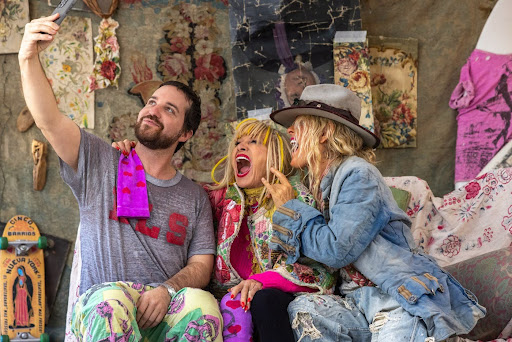
Magnolia Pearl was founded in 2002 by Robin Brown in Fredericksburg, Texas. Brown grew up in poverty, raising her siblings, finding beauty in discarded materials and worn cloth. The brand she built reflects that upbringing directly — each piece is hand-distressed, visibly mended, patchwork over aged fabric, sashiko-style stitching over worn hems. Nothing is hidden. The repair is the aesthetic.
The pieces are produced in small, non-repeating batches and sold through more than 350 boutiques worldwide, including through Free People. Two flagship stores — in Fredericksburg and at the Malibu Country Mart in California — draw collectors who treat the brand with the same seriousness they might give a gallery. The garments resell at double and triple their original retail prices in the secondary market. Taylor Swift wore the label during the folklore era, a personal choice made without arrangement or payment, discovered by fans before the brand knew about it. Whoopi Goldberg has worn the brand on television. Blake Lively on screen. The endorsement across all of these cases was organic — people choosing the pieces because of what they are.
That collector demand sustains the resale market, and the resale market sustains the Foundation’s giving. The more people seek out and trade Magnolia Pearl pieces, the more the platform generates in fees, and the more the Foundation receives.
What the Foundation does with it
The Peace Warrior Foundation’s giving reflects Brown’s biography. Its beneficiaries include organisations providing housing to Indigenous American veterans, veterinary and medical care to the animals of people experiencing homelessness, and arts education to children in communities where creative programmes have been cut from school budgets. These are conditions Brown knows from direct experience, not from a cause-marketing brief.
The grant figures are not self-reported. They are in audited nonprofit filings accessible through GuideStar, and they have been independently verified by published sources including the New York Weekly and Grazia. The $268,293 distributed in 2024 is a real number drawn from a real document.
The platform and its rare pieces
Magnolia Pearl Trade launched in 2023, giving the brand’s long-standing collector community a formal home and addressing the counterfeiting that had emerged as the informal secondary market grew. The platform auctions production samples and long-sold-out pieces alongside collector-listed pre-loved garments — things that have no other path to a new owner.
These are the pieces collectors spend years trying to find. When they surface on Trade and sell, 25% of the final value goes to the Foundation. The rarest Magnolia Pearl pieces in existence are also, through the platform’s structure, some of the most significant sources of charitable grants the Foundation receives.
Brown’s 2024 memoir, Glitter Saints: The Cosmic Art of Forgiveness, traces the origins of the brand’s philosophy — a childhood in which making something from discarded materials was a survival skill rather than a creative choice. The book makes clear that the Foundation was not added to the brand once it became successful. It was always the orientation. The Trade platform, with its documented giving record, is simply the most visible expression of that in the brand’s current form.
For collectors, the appeal of Magnolia Pearl Trade is unchanged: rare pieces, authenticated, from a label whose garments become more themselves with age. The giving is simply what the platform was built to carry alongside that.
Details at magnoliapearltrade.com
