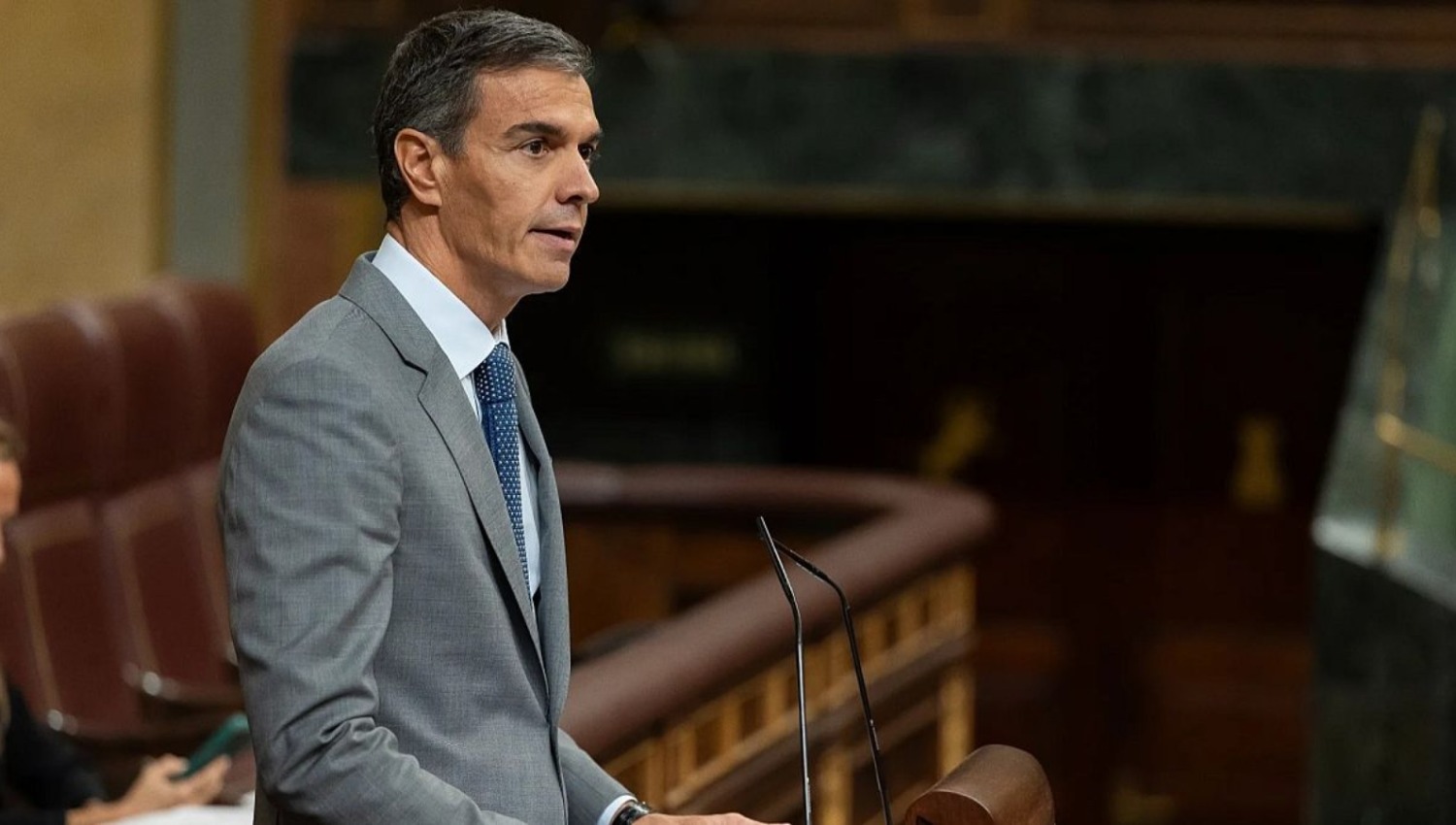
Spaniards will go to the polls early. Prime Minister Pedro Sánchez has called a general election for 29 November, days after the Congress of Deputies threw out two housing decrees drawn up by his government. The lower house rejected the measures on Friday, even though talks to win enough support went on until the last minute.
The decrees formed part of the government’s answer to Spain’s housing crisis, an issue Sánchez has tried to turn to his political advantage. After the defeat he spent the weekend in consultation with ministers and senior figures in his Socialist Party (PSOE), weighing whether to carry on until the end of the parliamentary term or to hand the decision to voters. He chose the second option.
The vote came at the end of a hard few months for the coalition. At the end of July the Spanish enclave of Ceuta in North Africa came under pressure on a scale it had not seen before, when tens of thousands of migrants crossed the border from Morocco. The government sent extra resources and, some weeks later, declared a “situation of interest for national security”, the first such declaration since Spain returned to democracy. The conservative People’s Party (PP) and the far-right Vox accused the government of reacting too slowly and challenged its policy towards Morocco. Sánchez has stood by the security forces and his ministers’ handling of the crisis.
Corruption cases and other legal proceedings involving people in the prime minister’s circle have added to the strain. In parliament, the government’s narrow majority has become harder and harder to hold together. Much of its legislative programme has had to be negotiated with partner parties one vote at a time, and it has lost several votes in Congress.
The decision to go to the country also registered on the markets. On Monday the euro slipped to a 17-month low, with Euronews linking the fall to mounting worries over French debt and the prospect of a snap election in Spain. Sánchez now has less than two months to make his case to voters, with housing, the situation in Ceuta and the corruption cases all likely to feature heavily in the campaign.